Why User-Centric Analytics Beats Event-Based Tracking
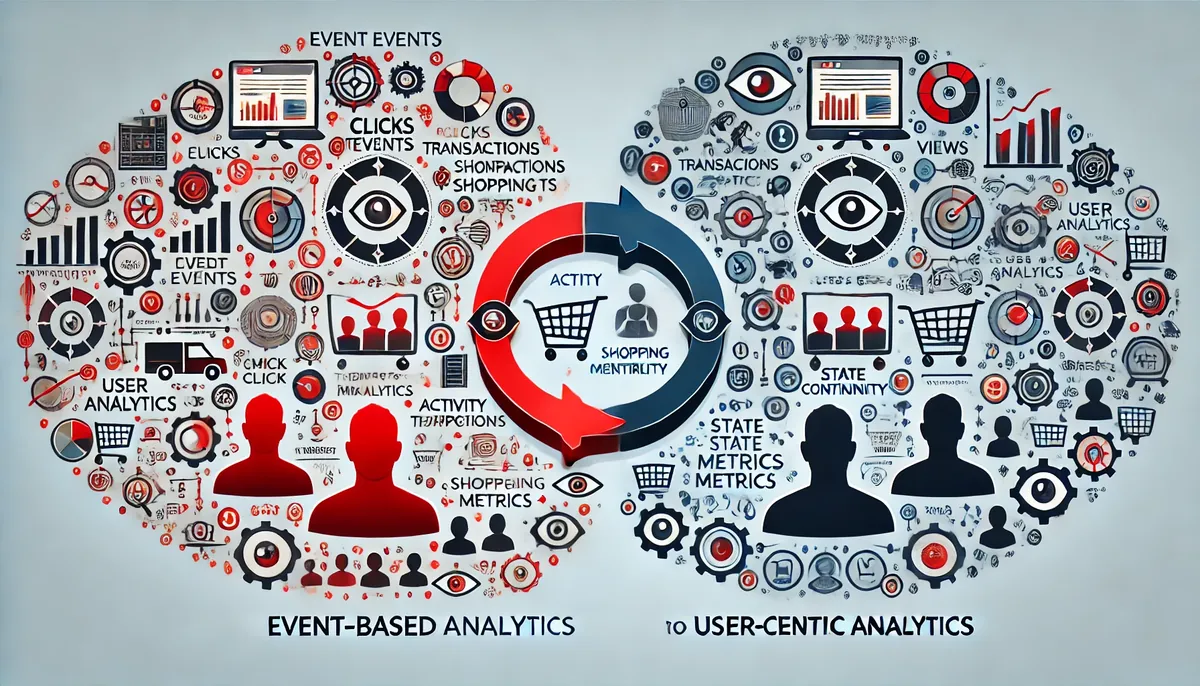
In the evolving landscape of product analytics, events have traditionally been the foundation for tracking user behavior. Every interaction (clicks, page views, transactions) gets logged as a discrete event. But is this granular tracking actually creating unnecessary complexity when what matters most is understanding user behavior and metrics at the user level? Let’s explore why events might not be the ideal foundation for user analytics and discover a more effective approach.
The Event-User Mismatch
Product teams consistently focus on user-centric questions:
- How many active users do we have?
- What’s our user retention rate month over month?
- Which user segments drive the highest revenue growth?
- How does user engagement evolve throughout the customer lifecycle?
Notice the pattern? These questions center around users, not events. Yet our analytics infrastructure forces us to construct these user-centric metrics from event-level data, creating a fundamental disconnect between business thinking and data structure.
The Hidden Complexity of Event Analytics
Event-based analytics introduces several layers of complexity that impact both performance and usability:
1. Aggregation Overhead
Every user-level metric requires complex event aggregation:
- Active user status? Count events within a time window
- Customer lifetime value? Sum transaction events over time
- Engagement score? Weighted calculations across multiple event types
This constant need for aggregation doesn’t just add computational overhead; it makes metrics harder to define, maintain, and trust.
2. Temporal Challenges
 Event aggregation creates gaps in user behavior tracking (gray: event aggregated value, red: inactive, green: active)
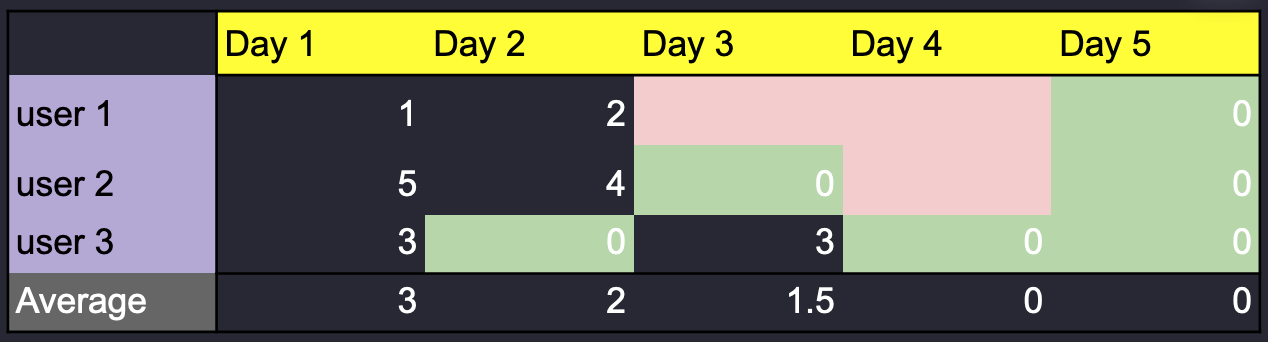 User-property tracking maintains continuous state visibility (gray: user property value, red: inactive, green: active)
Events represent moments in time, but user behavior exists on a continuum. Understanding behavior changes over time requires complex window functions and date-based aggregations that often become performance bottlenecks.
3. State Management Complexity
Users maintain persistent states between events (like “premium subscriber” or “churned”), but event data doesn’t naturally capture this continuity. This forces teams to build complex state management systems, turning simple metric changes into month-long development cycles.
Bridging the Gap: The User-Action Entity Model
What if we flipped the script and structured analytics around users first, while maintaining event granularity when needed? This is exactly the shape of Asemic’s entity table: one row per user per day, precomputed. The user-centric approach delivers multiple benefits:
-
Business Logic Alignment
- Matches how product teams think about metrics
- Simplifies stakeholder communications
- Accelerates decision-making processes
-
Analysis Simplification
- Makes common queries intuitive
- Reduces analysis complexity
- Improves metric consistency
-
Performance Optimization
- Minimizes repeated aggregations
- Improves query response times
- Reduces computational overhead
-
Enhanced Flexibility
- Maintains event-level detail access
- Supports custom analysis needs
- Enables rapid iteration
A Better Way Forward
Consider tracking user engagement in both systems:
Traditional Event-Based Approach:
SELECT
    user_id,
    DATE_TRUNC('day', event_time) as day,
    COUNT(*) >= 1 as is_active
FROM events
WHERE event_type IN ('view', 'click', 'purchase') -- Only these?
GROUP BY 1, 2
User-Centric Approach:
SELECT
    user_id,
    date,
    is_active
FROM user_daily_states
The user-centric model dramatically simplifies answering common questions.
Rethinking Product Analytics
Shifting from event-centric to user-centric analytics transforms how teams work with data:
-
Intuitive Metric Definition
- ARPDAU becomes a simple division of revenue by active users
- Retention calculations work directly with user states
- Cohort analysis uses natural user groupings
-
Simplified Analysis Construction
- Faster query development
- Reduced error potential
- Better performance characteristics
-
Improved Business Alignment
- Metrics match business concepts
- Faster stakeholder communication
- More reliable reporting
Looking Ahead
The future of product analytics isn’t about collecting more events; it’s about building better abstractions that help us understand user behavior intuitively. The most effective analytics solutions will bridge the gap between event-level detail and user-level insights, providing both granularity and simplicity.
Key Takeaways
- Event-based analytics create unnecessary complexity
- User-centric models align better with business goals
- Simplified analysis leads to faster insights
- Performance improvements come naturally
- Future tools need better abstractions
Want product analytics that works at the user level? Asemic’s data model is built exactly this way, and it is what makes causal decomposition possible. Book a demo to see it on your own data.